- Home
- Vegetable Garden Soil
- Compost Bin Tumbler
Best Compost Bin Tumbler Designs

The best compost bin tumbler designs listed below are for making your own organic fertilizer for home gardening.
Design Your Own Vegetable Garden Layout Using our Free "Vegetable Garden Planner" Software!
Enjoy the many benefits of choose a composting tumbler for recycling your lawn clippings, yard debris and kitchen scraps!
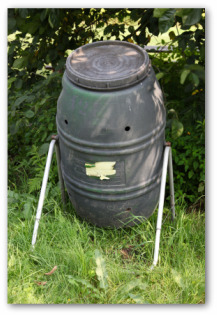
In the opinion of many avid gardeners, a composting tumbler is the way to go for making the valuable garden "gold" for your vegetables while remaining neatly tucked out of sight.
Plastic compost tumblers look like ordinary trash bins and they are easily screened from view by a vine-covered trellis or a potting shed.
A benefit to the tumbler being designed out of plastic is that it will not rust such as metal drums tend to do over time.
Download Free Garden Planning Worksheets, Garden Diary, Zone Chart, Or Planting Guide
A compost tumbler is one of the most practical investments a home gardener can make for building vegetable garden soil — it makes composting faster, neater, and easier to manage than an open pile.
This page is part of our Soil, Fertilizer and Composting hub, where you will find complete guides to composting methods, fertilizing, mulching, manure use, and making compost tea for your vegetable garden soil.
Soil, Fertilizer and Composting — complete hub for building rich vegetable garden soil through composting, fertilizing, mulching, and manure
Best Compost Tumbler
The great part of using a tumbler is the efficient way it turns your recyclable materials such as grass clippings, yard debris, and kitchen scraps into a steady supply of organic matter without needing to use a gardening fork.
The necessary requirement of turning the compost frequently to provide air circulation and moisture to all parts of the decomposing organics is taken care of by merely spinning the tumbler.
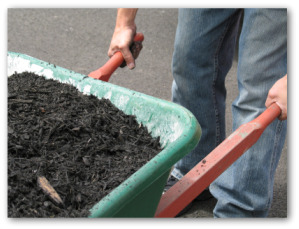 Adding compost to the garden bed before winter begins helps build up soil nutrients for next year's garden.
Compost Tea Added Benefit
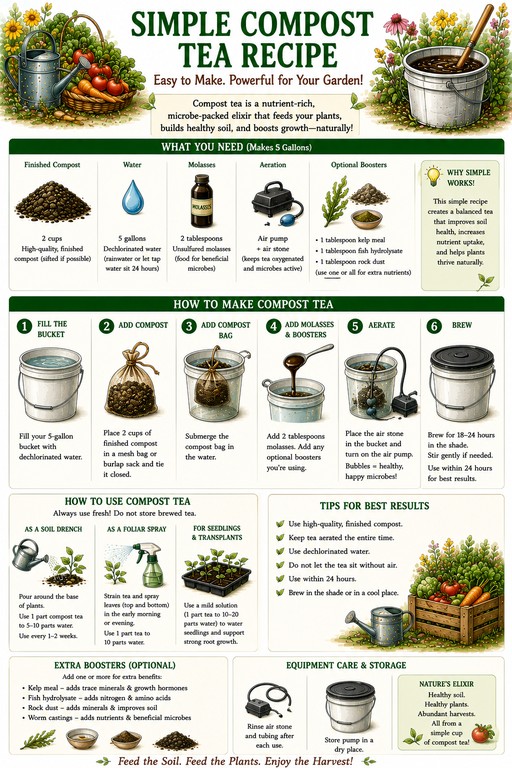
As a bonus, at the base of the compost tumbler, liquids from the composting wastes are collected, which can serve as compost tea.
The garden tonic can be drained directly from the bin into a bucket.
Compost tea is full of essential nutrients and an excellent way to give your plants an added boost.
Tumbler Tips
- You want your garden soil to contain up to 50 percent compost and other soil amendments.
For example, if you are digging a 10 inch bed, you would add up to a 5 inch deep layer of compost.
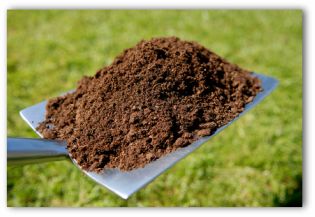 Healthy garden soil is rich in nutrients; compost plays an important role in soil quality.
Use the same rule of thumb as above when preparing planting holes.
- Dig out the soil, place it in a wheelbarrow, and mix it with the compost.
- Allow about 2 parts soil to 1 part amendment.
- Line the bottom of the hole with this rich mixture and back fill around the roots after your plants are set.
Benefits of Compost in Your Garden

Compost is the best way to condition and improve your garden soil fertility.
Toss leaves, twigs, banana peels, coffee grounds, tea leaves, egg shells, fruit and vegetable scraps, and other non-meat waste material into the tumbler to be transformed into soft humus which plants adore.
Sawdust, weathered mulch material, lawn clippings, dry leaves, and wood chips are good soil amendments.
However, while they are decomposing, they tend to tie up a lot of beneficial soil nutrients.
Make sure these materials are aged-well before using them.
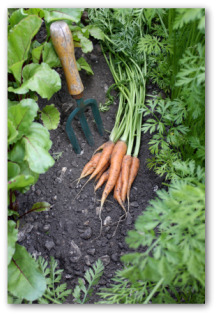 Mulch and compost play important roles in creating a healthy vegetable garden.
Compost Bins
 There are many types of compost bins to choose from; download this handy chart by clicking on the image.
Tumblers are generally equipped with rollers so the bins can be taken for a spin with ease and provide mobility for the bins.
- It typically takes a tumbler around 4-6 weeks to turn nature's garbage into vegetable gardening riches.
- Under ideal conditions, decomposition can take place in only 2-3 weeks.
- You can speed along the decomposition process by adding a little high-nitrogen organic fertilizer into the tumbler.
Back Porch Compost Tumblers
A back porch compost tumbler can be conveniently rolled from its hideaway spot on your porch to the exact location where you will be using the finished product.
Then simply remove the black gold from the tumbler to be worked into the beds.
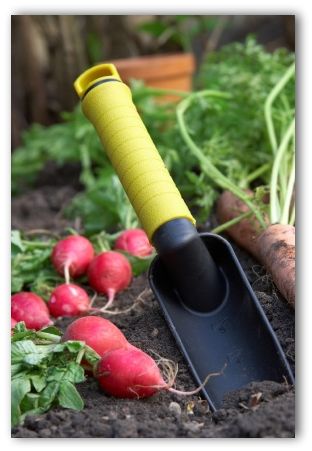
Although, the average compost bin tumbler can adequately decompose organic wastes produced by the average sized family, many gardeners prefer to keep two or more tumblers to ensure having ready compost on hand.
Composting Turns Waste into Gold for Your Garden
 Compost adds nutrients to your vegetable garden soil.
A compost bin tumbler can turn garden and kitchen waste into soil amendments for providing the garden with the most fertile and well-balanced soil to grow your vegetables.
The tumblers are sold commercially at most garden centers, or can be ordered online.
You can also help the environment in turn by purchasing a compost bin tumbler that is made from recycled plastics.
Rutgers University's New Jersey Agricultural Experiment Station has a detailed guide to using leaf compost for improving vegetable garden soil at njaes.rutgers.edu — covering compost readiness, how to screen finished compost, correct application rates, and how leaf compost compares to other soil amendments.
A useful reference for anyone managing their own composting program.
Rutgers University — Using Leaf Compost — research guide to leaf compost quality, application rates, and how to use finished compost to improve vegetable garden soil

Recent Articles


-
How to Grow Cabbage
Sep 15, 26 12:33 PM
 How to Grow Cabbage: The Complete Guide from Seed to Harvest. This complete guide covers everything you need to know about how to grow cabbage.
 -
Easiest Vegetables to Grow: 15 Foolproof Crops for Beginners
Sep 15, 26 09:24 AM
 Easiest vegetables to grow for beginners - with advice on what makes each one easy, how to get started, and which vegetables are harder than they look.
 -
How to Grow Green Beans
Sep 14, 26 07:53 PM
 How to Grow Green Beans: The Complete Guide to Bush and Pole Beans. Green beans are one of the most forgiving crops a beginner can choose.
 -
Seasonal Vegetable Garden
Sep 14, 26 05:38 PM
 Seasonal Vegetable Garden — Growing Food Through Every Season
 -
Overwintering Vegetables: Fall-Planted Crops for Early Spring Harvest
Sep 14, 26 05:35 PM
 Learn about overwintering vegetables like garlic, fava beans, and onions, planted in fall to sit through winter and reward you with an early spring harvest.
 -
Free Vegetable Garden Journal— Printable Downloads for Home Gardeners
Sep 14, 26 01:51 PM
 Download our free Vegetable Garden Journal — choose a full 16-page version or simpler 7-page journal. Track planting, harvest, & garden notes season by season.
 -
Free Vegetable Garden Cut and Paste Activities for Kids Ages 5-7
Sep 12, 26 09:13 PM
 Free printable vegetable garden cut and paste activities for kids ages 5-7. Build your own garden, match seeds to plants, and learn what grows where.