- Home
- Planning a Vegetable Garden
- Raised Bed Vegetable Garden
Raised Bed Vegetable Garden:
Plans, Layouts, and How to Build One
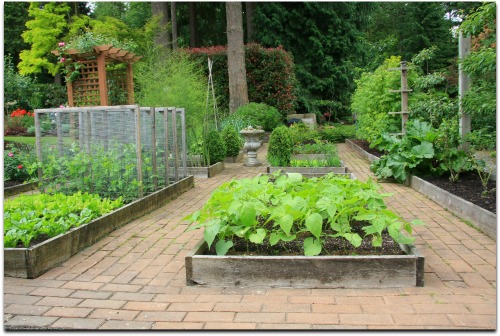
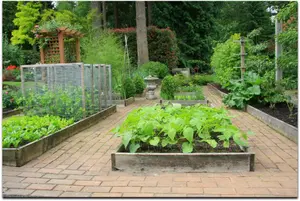
A raised bed vegetable garden is a bottomless frame, usually four feet wide, filled with rich loose soil and set in the sunniest spot you have.
It drains well, warms up early in spring, keeps weeds and grass out, and puts your plants at a height that is easy to reach.
This guide covers where to put a raised bed, what size and depth to make it, the best materials, how to build and fill it in a weekend, a free 4x8 planting plan, and what to grow.
Free garden tools for your own zip code
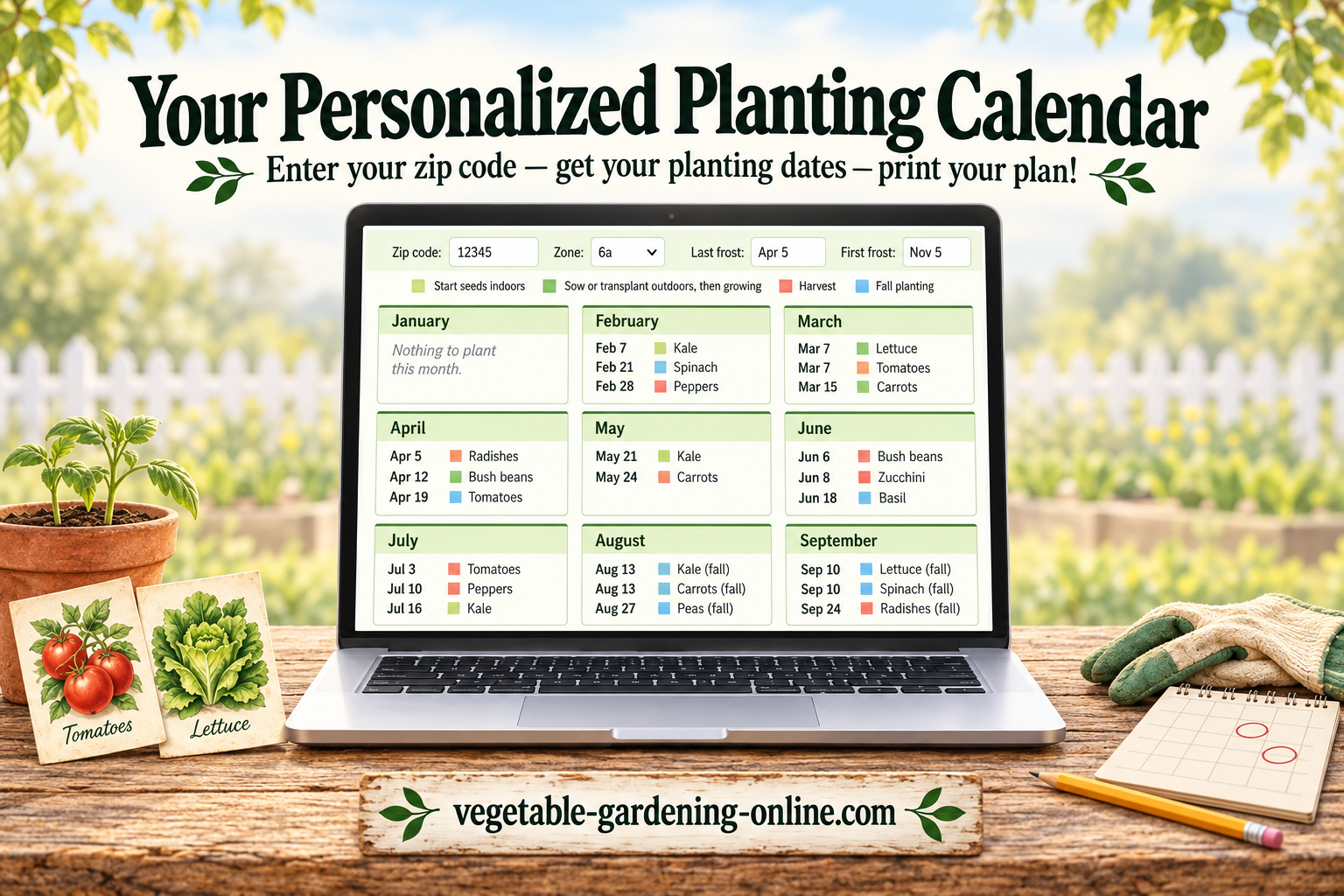 Planting Calendar |
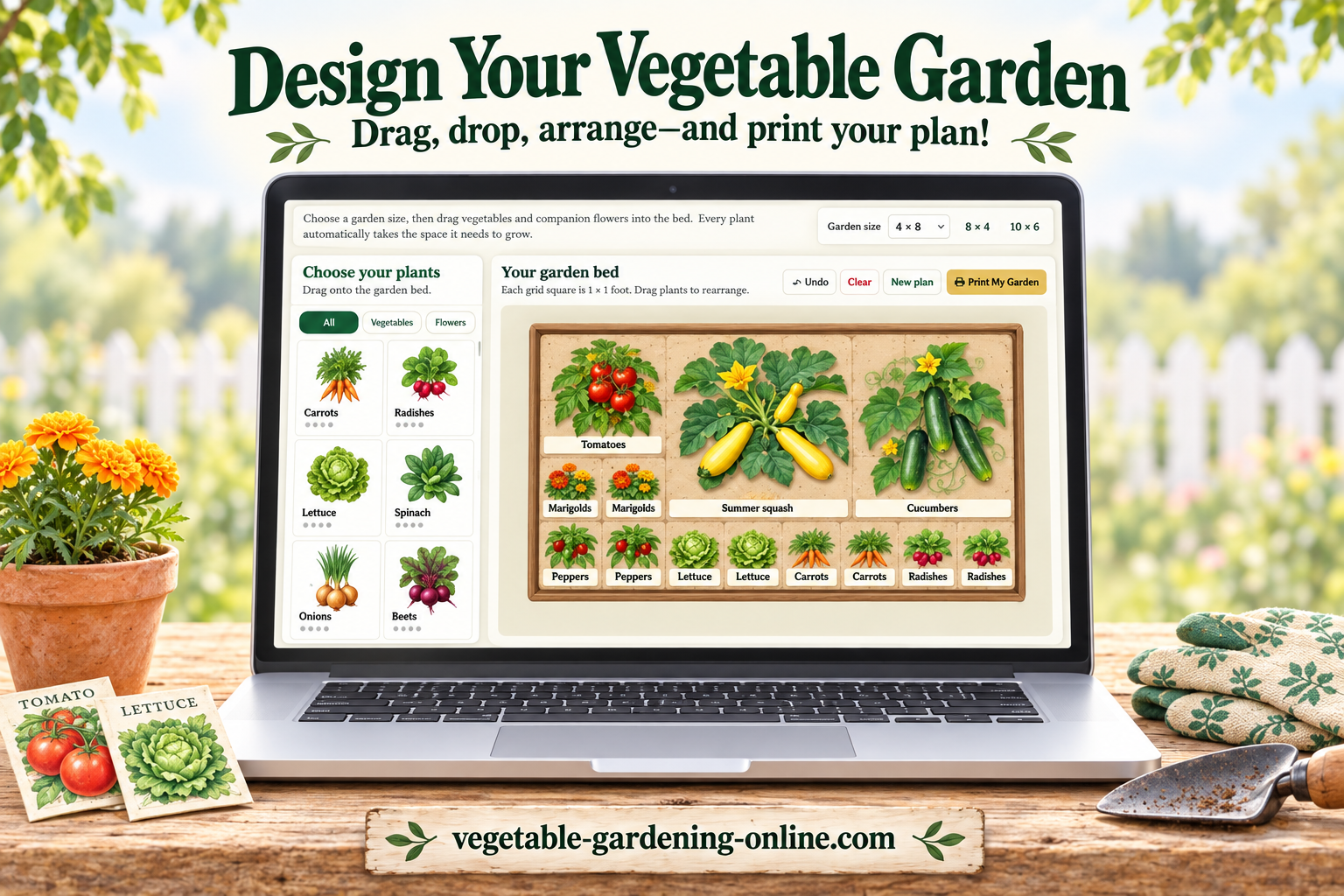 Garden Planner |
 Zone Finder |
My husband and I garden in raised beds because here in rainy Oregon they drain far better than our clay soil and warm up weeks earlier in spring.
It's also nice to sit on the edge while planting and weeding instead of kneeling on the ground!
One Saturday we built one with two of our grandchildren; the video is further down this page.
On this page
Why a Raised Bed Vegetable Garden Works So Well
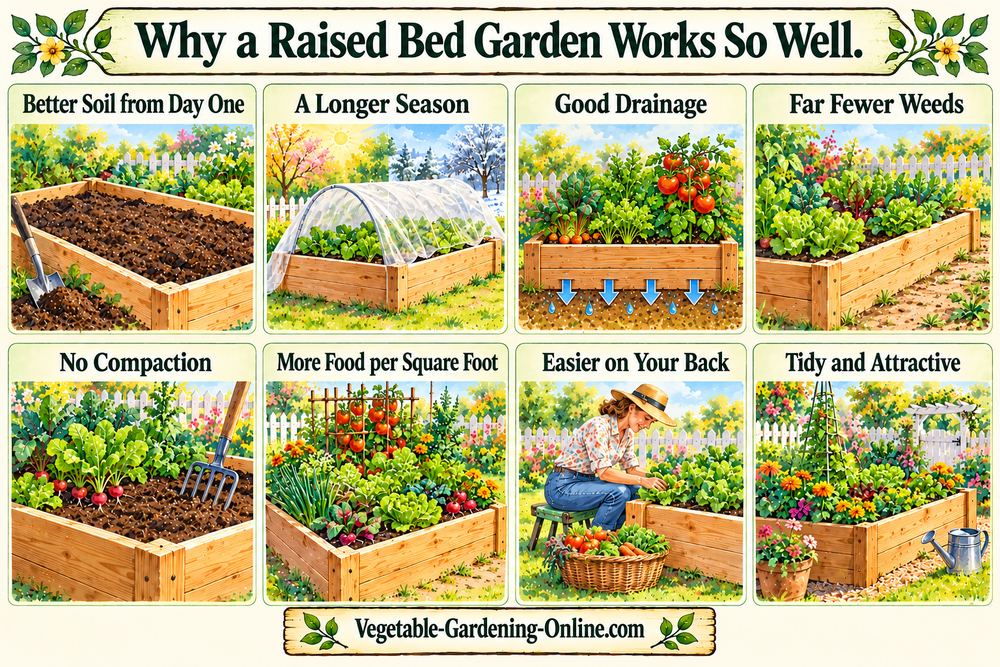
- Better soil from day one. You fill the bed with a good mix instead of fighting clay, sand, or rocky ground. Poor native soil stops mattering.
- A longer season. Raised soil warms faster in spring, often giving two to four extra weeks at each end of the season.
- Good drainage. Beds never sit waterlogged, so roots stay healthy and fall crops don't crack and rot in wet weather.
- Far fewer weeds. Fresh soil carries few weed seeds, and the frame keeps lawn grass from creeping in.
- No compaction. You never walk on the soil, so it stays loose and never needs tilling.
- More food per square foot. Rich, loose soil lets you plant closely, so a single 4x8 bed can keep one or two people in fresh vegetables all season.
- Easier on your back. The deeper the bed, the less you bend. At 18 inches or more you can sit on the edge to work, and beds raised on legs can be reached from a wheelchair.
- Tidy and attractive. A well-built raised bed looks good in the front yard, beside a patio, or along a walk, and there's less mud tracked into the house.
Where to Put a Raised Bed Vegetable Garden
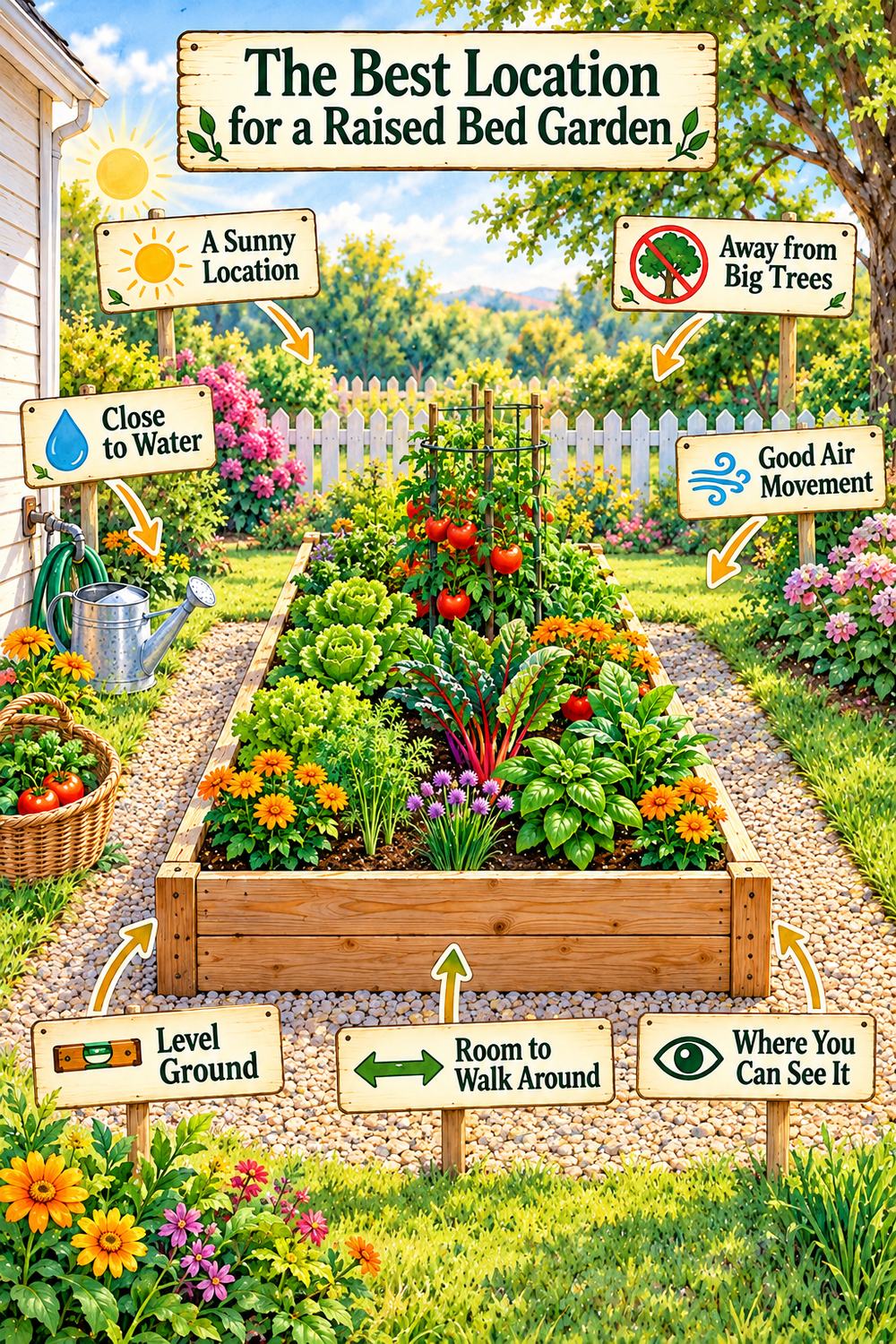
Sun comes first. Most vegetables need six to eight hours of direct sun a day, and tomatoes, peppers, and cucumbers need the most.
Before you build, spend a day watching how the light moves across your yard and put the bed in the sunniest spot, even if it's not where you pictured it.
If your best spot gets only four to six hours, grow leafy crops (lettuce, spinach, kale, herbs, radishes) rather than fruiting ones.
- Close to water. Raised beds dry out faster than the ground. A faucet or hose nearby means you'll actually water.
- Level ground. A slope waters unevenly. Level the spot first, or build stepped beds across the slope.
- Away from big trees. Tree roots will find their way into a raised bed within a season or two.
- Good air movement. Avoid closed-in corners where air sits still and disease builds up.
- Room to walk around it. Leave at least 18 inches of path around each bed, 24 inches if you use a wheelbarrow.
- Where you'll see it. A bed by the front door, porch, or patio gets noticed every day, so picking, pruning, and pest problems don't get missed.
You can set a raised bed right on the lawn: lay cardboard or several sheets of newspaper underneath and the grass dies and feeds the bed.
On a patio, concrete, or a rooftop, make the bed at least 12 inches deep (18 is better) and make sure water can drain out the bottom.
Beds can run east to west or north to south, whichever fits your yard.
What matters is that tall crops go on the north end so they don't shade the shorter ones.
What Size and How Deep?
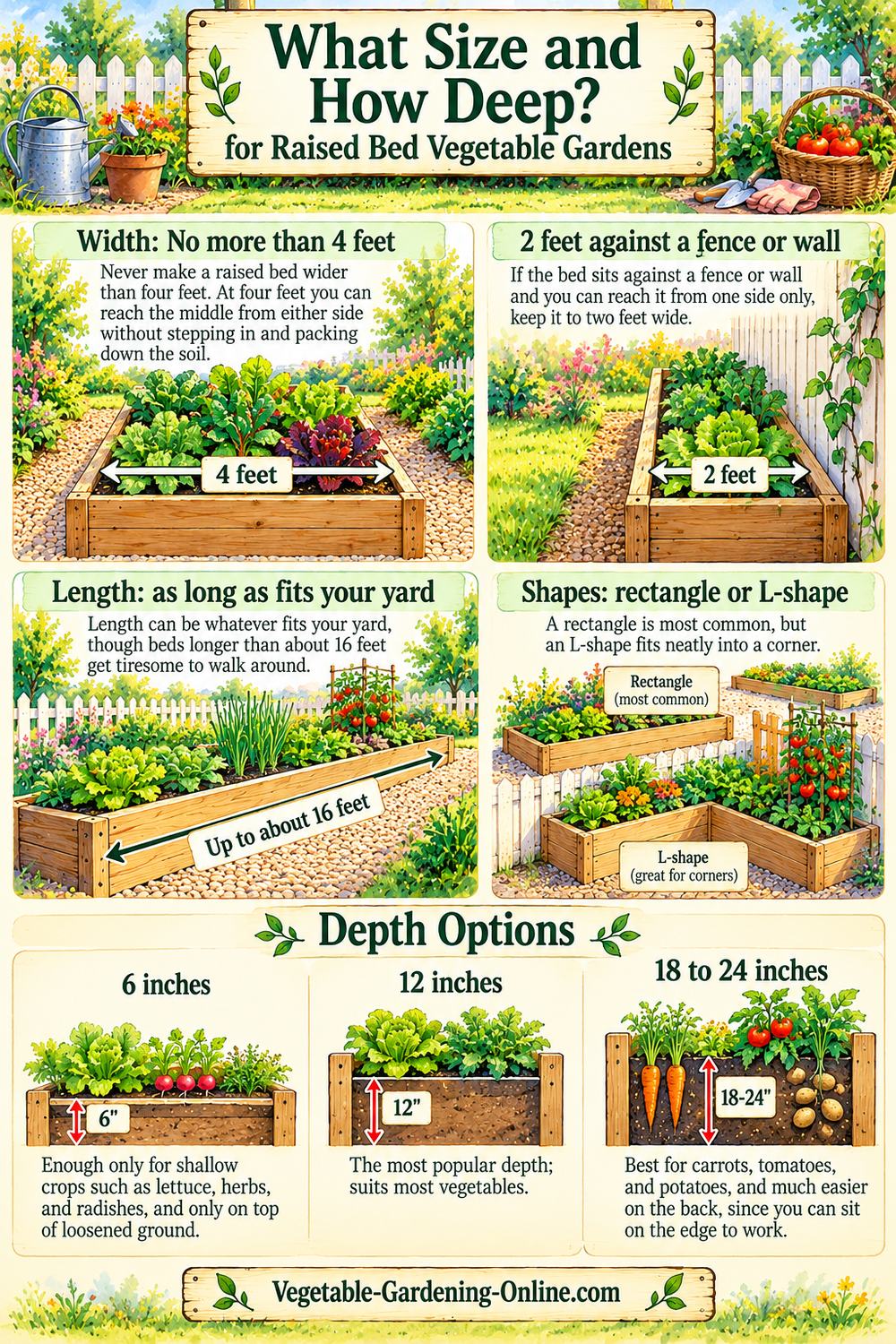
The one rule: never make a raised bed wider than four feet. At four feet you can reach the middle from either side without stepping in and packing down the soil.
If the bed sits against a fence or wall and you can reach it from one side only, keep it to two feet wide.
Length can be whatever fits your yard, though beds longer than about 16 feet get tiresome to walk around.
A rectangle is most common, but an L-shape fits neatly into a corner.
| Size | Square feet | Best for |
|---|---|---|
| 4 x 4 ft | 16 | A first garden or a very small space |
| 4 x 8 ft | 32 | The most popular size; fits most yards and produces well |
| 4 x 12 ft | 48 | A small family, or the second year |
| 4 x 16 ft | 64 | Serious food growing; about the longest that's easy to walk around |
| 4 x 20 ft | 80 | Enough for two people all season; see the free 4x20 plan |
How deep should a raised bed be?
- 6 inches: enough only for shallow crops such as lettuce, herbs, and radishes, and only on top of loosened ground.
- 12 inches: the most popular depth; suits most vegetables.
- 18 to 24 inches: best for carrots, tomatoes, and potatoes, and much easier on the back, since you can sit on the edge to work.
Framed, Mounded, or Elevated Raised Beds
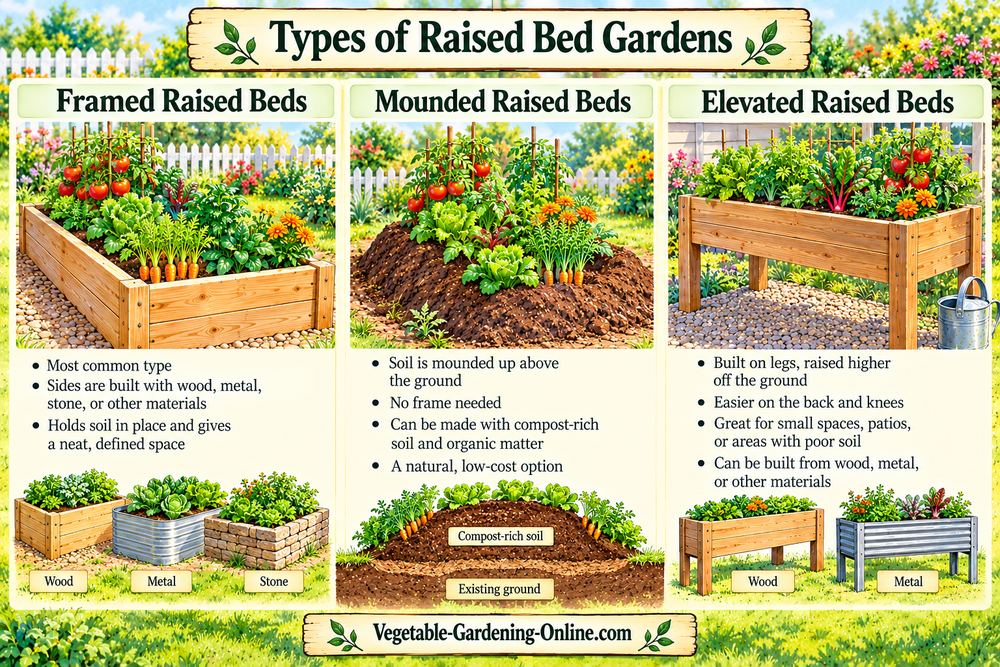
Framed beds
A frame of wood, block, stone, or steel holds the soil in a neat rectangle.
Framed beds cost more in time and materials, and the sides can give slugs and other pests a place to hide, but they are tidy, they keep grass out, and you can sit on the edge while you work.
This is what most people mean by a raised bed vegetable garden.
Mounded beds with no frame
The simplest raised bed is soil mounded six to twelve inches above the ground, raked flat on top, with the sides sloping down.
There is nothing to buy or build, and the slopes add growing space. The drawbacks: mounds dry out faster, heavy rain can run off instead of soaking in, and mulch tends to slide down the sides into the paths.
A mounded bed also has its own small climates. The south-facing slope is warmer and drier and crops earlier, so it suits heat lovers such as Mediterranean herbs, while the cooler north side suits crops that like moisture.
Elevated beds on legs
A bed built at table height on legs can be reached standing up or from a wheelchair.
It needs to be at least 10 to 12 inches deep inside and must drain from the bottom.
Elevated beds dry out quickest of all, so plan on a drip line.
The Best Materials for a Raised Bed
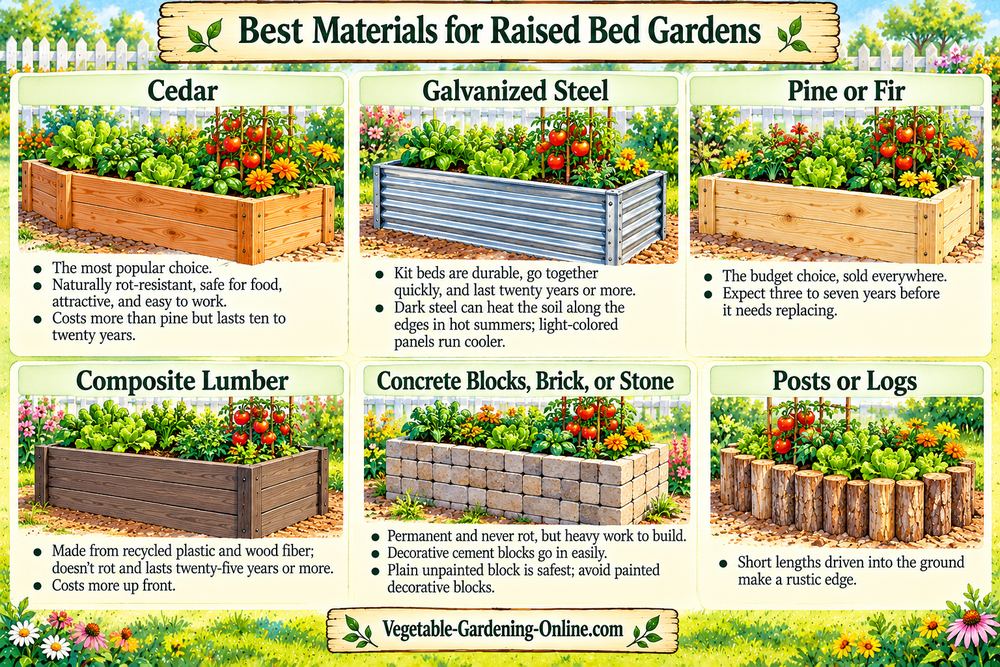
- Cedar: the most popular choice. Naturally rot-resistant, safe for food, attractive, and easy to work. It costs more than pine but lasts ten to twenty years.
- Galvanized steel: kit beds are durable, go together quickly, and last twenty years or more. Dark steel can heat the soil along the edges in hot summers; light-colored panels run cooler.
- Pine or fir: the budget choice, sold everywhere. Expect three to seven years before it needs replacing.
- Composite lumber: made from recycled plastic and wood fiber; doesn't rot and lasts twenty-five years or more. Costs more up front.
- Concrete blocks, brick, or stone: permanent and never rot, but heavy work to build. We used decorative cement blocks from the local home center and they went in easily. Plain unpainted block is safest; avoid painted decorative blocks.
- Posts or logs: short lengths driven into the ground make a rustic edge.
Never use railroad ties or old telephone poles, which are soaked in creosote, or older pressure-treated lumber marked CCA, which contains arsenic. Both can leach into the soil and into your vegetables. If you're unsure about any treated wood, line the inside of the frame with heavy food-safe plastic.
How to Build a Raised Bed Vegetable Garden
in a Weekend
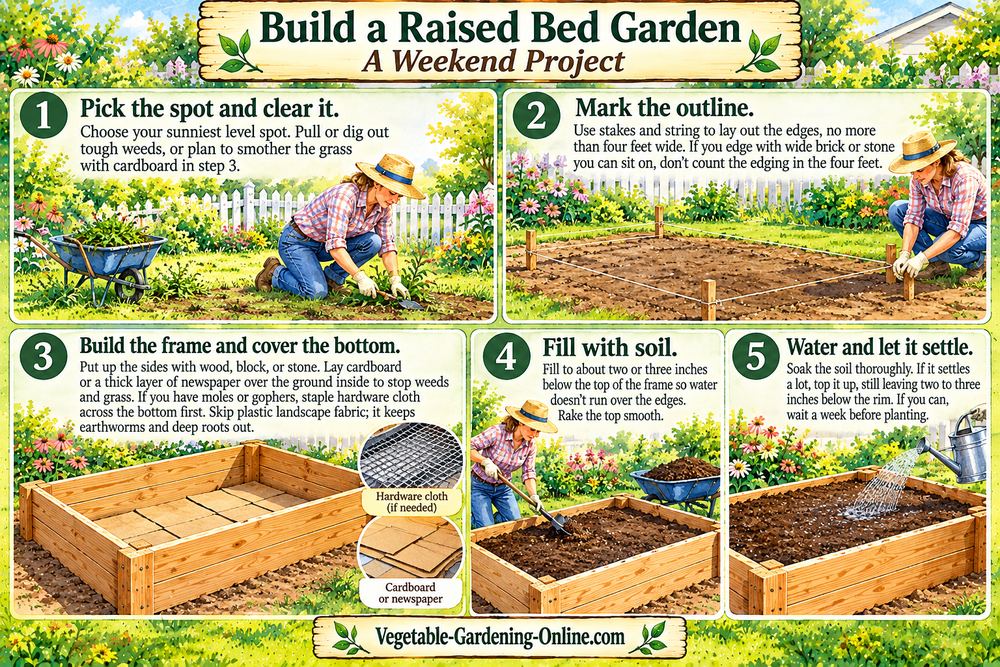
- Pick the spot and clear it. Choose your sunniest level spot. Pull or dig out tough weeds, or plan to smother the grass with cardboard in step 3.
- Mark the outline. Use stakes and string to lay out the edges, no more than four feet wide. If you edge with wide brick or stone you can sit on, don't count the edging in the four feet.
- Build the frame and cover the bottom. Put up the sides with wood, block, or stone. Lay cardboard or a thick layer of newspaper over the ground inside to stop weeds and grass. If you have moles or gophers, staple hardware cloth across the bottom first. Skip plastic landscape fabric; it keeps earthworms and deep roots out.
- Fill with soil. Fill to about two or three inches below the top of the frame so water doesn't run over the edges. Rake the top smooth.
- Water and let it settle. Soak the soil thoroughly. If it settles a lot, top it up, still leaving two to three inches below the rim. If you can, wait a week before planting.
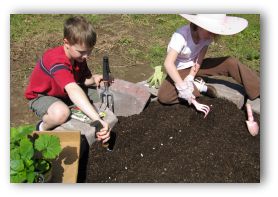
Here's the Saturday project with our grandchildren. They had a great time helping and learned firsthand how a raised bed is built and planted.
Below it, a second short video shows raised beds in many styles, from 2x6 wood frames to posts and cement landscape pavers.
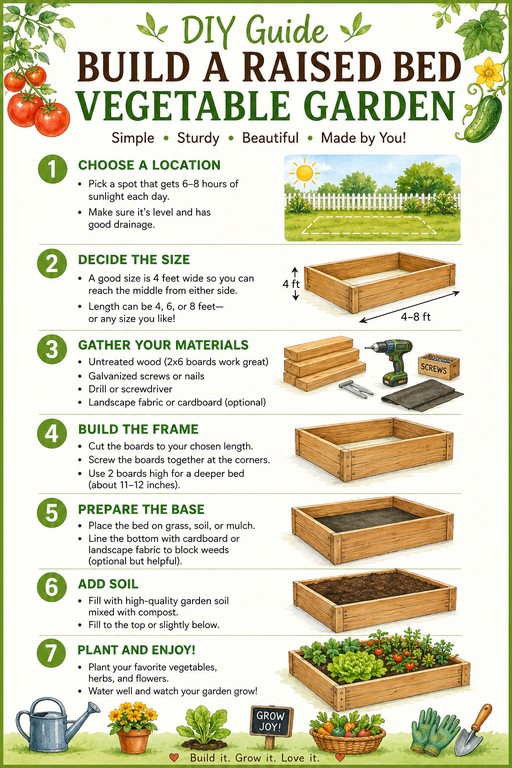
Our Family's Saturday Raised Bed Garden Project
Now our grandkids are all grown up. But we have many happy memories of time spent with them. They were always willing to help Grandma and Grandpa with projects; building the raised bed garden, installing our lawn sprinkler system, and laying pavers for our patio are a few of the projects that they helped with.

The video below shows photographs of many different types and styles of raised bed gardens. It is one minute long.
Filling Your Raised Bed Vegetable Garden with Soil
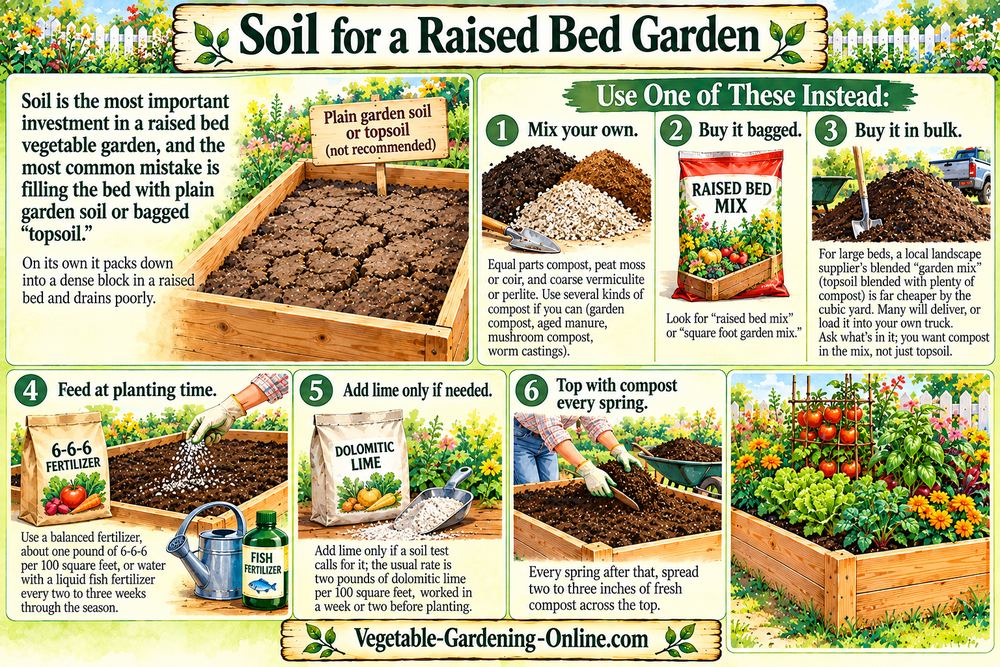
Soil is the most important investment in a raised bed vegetable garden, and the most common mistake is filling the bed with plain garden soil or bagged "topsoil." On its own it packs down into a dense block in a raised bed and drains poorly. Use one of these instead:
- Mix your own: equal parts compost, peat moss or coir, and coarse vermiculite or perlite. Use several kinds of compost if you can (garden compost, aged manure, mushroom compost, worm castings).
- Buy it bagged: look for "raised bed mix" or "square foot garden mix."
- Buy it in bulk: for large beds, a local landscape supplier's blended "garden mix" (topsoil blended with plenty of compost) is far cheaper by the cubic yard. Many will deliver, or load it into your own truck. Ask what's in it; you want compost in the mix, not just topsoil.
How much soil? Length x width x depth, in feet, gives cubic feet. At 12 inches deep, a 4x4 bed takes 16 cubic feet, a 4x8 takes 32, and a 4x12 takes 48. A cubic yard is 27 cubic feet.
Feed the bed at planting time with a balanced fertilizer, about one pound of 6-6-6 per 100 square feet, or water with a liquid fish fertilizer every two to three weeks through the season.
Add lime only if a soil test calls for it; the usual rate is two pounds of dolomitic lime per 100 square feet, worked in a week or two before planting.
Every spring after that, spread two to three inches of fresh compost across the top.
That is all the yearly soil care a raised bed needs. Recipes, amounts, and costs are on the raised garden bed soil page.
Raised Bed Vegetable Garden Plans and Layouts
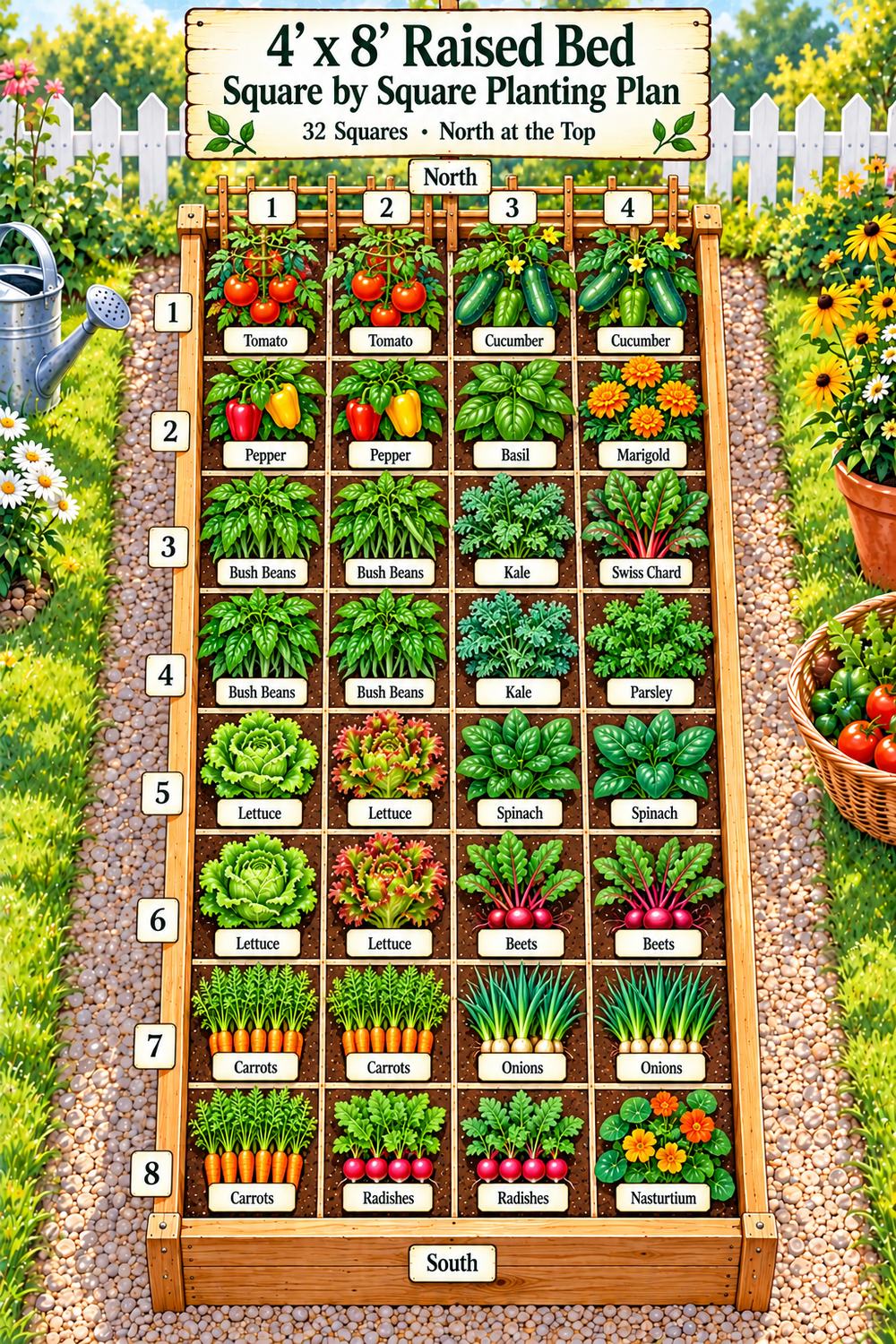
Plant the tallest crops (tomatoes, trellised cucumbers and beans, corn) at the north end, medium crops in the middle, and the shortest at the south end.
Fill the whole bed; there's no need to leave room to walk. Planting in blocks instead of rows gives you more food from the same space, and the leaves soon shade out weeds.
The square foot method
The easiest way to space a raised bed is to divide it into one-foot squares with string and plant each square according to the size of the crop.
| Plants per square | Vegetables |
|---|---|
| 1 | Tomatoes, peppers, broccoli, cabbage, kale, cucumbers (on a trellis) |
| 4 | Lettuce, Swiss chard, basil, parsley, strawberries |
| 9 | Spinach, bush beans, peas, beets |
| 16 | Carrots, radishes, onions, garlic |
Zucchini and summer squash need about three squares each, so give them the corner of a larger bed.
One plant feeds a family, with plenty left for zucchini bread.
A free 4x8 raised bed planting plan
Here's a first-year plan for the most popular bed size. North is at the top.
The number in each square is how many plants go in it.
| NORTH (trellis along this end) | |||
| Tomato 1 | Tomato 1 | Cucumber 1 | Cucumber 1 |
| Pepper 1 | Pepper 1 | Basil 4 | Marigold 1 |
| Bush beans 9 | Bush beans 9 | Kale 1 | Swiss chard 4 |
| Bush beans 9 | Bush beans 9 | Kale 1 | Parsley 4 |
| Lettuce 4 | Lettuce 4 | Spinach 9 | Spinach 9 |
| Lettuce 4 | Lettuce 4 | Beets 9 | Beets 9 |
| Carrots 16 | Carrots 16 | Onions 16 | Onions 16 |
| Carrots 16 | Radishes 16 | Radishes 16 | Nasturtium 1 |
| SOUTH | |||
When the radishes and lettuce come out in early summer, fill those squares right away with more lettuce, bush beans, or a fall crop of spinach.
Sow lettuce a few squares at a time, two weeks apart; plant a whole bed at once and it all bolts before you can eat it.
A trellis or cage along the north end is the biggest space-saver in a small bed.
A six-foot trellis can carry all your cucumbers, pole beans, or peas while using almost no soil, and tomato cages keep the vines upright and out of the paths.
Lay out your own raised bed vegetable garden on screen: the free garden planner lets you set the bed size and drag in vegetables with correct spacing. Prefer paper? The free garden plans include a 4x20 raised bed plan and a square foot plan, and the square foot gardening guide goes into the method in detail.
What to Plant in a Raised Bed Vegetable Garden

Grow what your family likes to eat; with limited space, every square should count.
Mix quick crops that give you early harvests with slower summer crops.
Always include at least one tomato plant: a single healthy vine can give you 20 to 50 pounds of tomatoes.
| Vegetable | Why it does well in a raised bed | Days to harvest | Season |
|---|---|---|---|
| Lettuce and salad greens | Fast, cut-and-come-again, fills gaps | 30–45 | Cool |
| Radishes | The quickest success; almost foolproof | 25 | Cool |
| Spinach | Pick the outer leaves for weeks | 40 | Cool |
| Carrots | Love the deep, loose, stone-free soil | 70–75 | Cool |
| Kale | Produces from spring into winter | 60 | Cool |
| Cherry tomatoes | One plant gives hundreds of fruits | 65–75 | Warm |
| Peppers | Like the warm soil; compact and productive | 70–80 | Warm |
| Bush beans | Sow after the last frost; no staking needed | 55 | Warm |
| Cucumbers | Train up a trellis at the north end | 60 | Warm |
| Basil and herbs | Fill gaps and give you a harvest from week one | 30 | Warm |
Tuck a few marigolds, nasturtiums, or zinnias into the corners. They draw pollinators, marigolds and nasturtiums help keep pests away, and the color makes a raised bed a pretty spot in the yard.
See the companion planting chart for more pairings.
Watering a Raised Bed Vegetable Garden
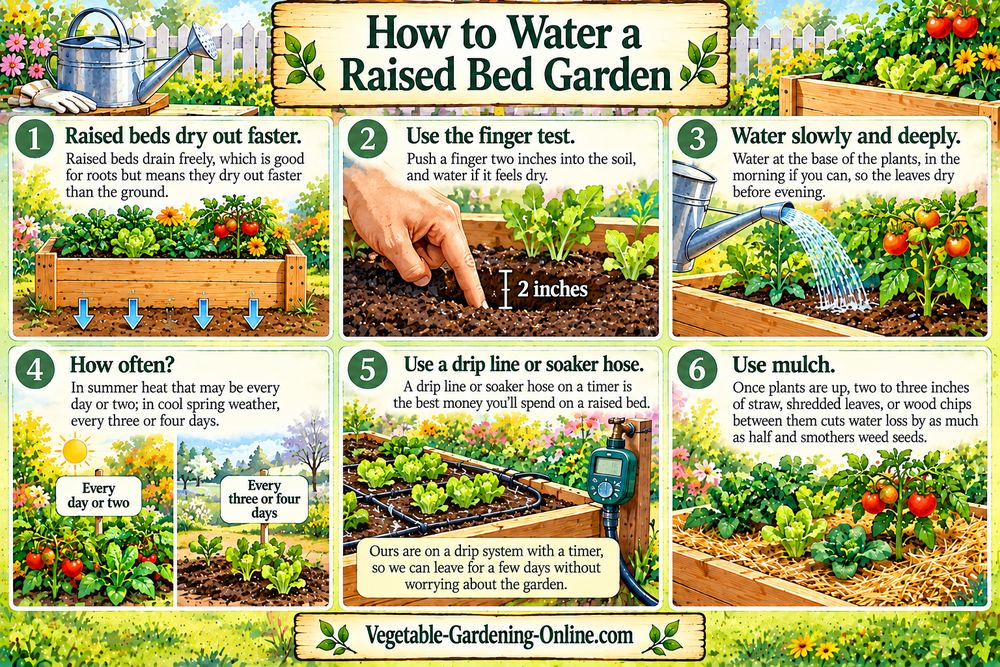
Raised beds drain freely, which is good for roots but means they dry out faster than the ground.
Use the finger test: push a finger two inches into the soil, and water if it feels dry.
In summer heat that may be every day or two; in cool spring weather, every three or four days.
Water slowly and deeply at the base of the plants, in the morning if you can, so the leaves dry before evening.
A drip line or soaker hose on a timer is the best money you'll spend on a raised bed.
Ours are on a drip system with a timer, so we can leave for a few days without worrying about the garden.
Once plants are up, two to three inches of straw, shredded leaves, or wood chips between them cuts water loss by as much as half and smothers weed seeds.
Raised Bed Care Through the Seasons
 Raised bed used as a cold frame with a clear lid for growing early spring vegetables.
Spring
- Spread two to three inches of fresh compost over the whole bed; it feeds the bed all season.
- Pull any winter weeds; they slip right out of the loose soil.
- Check the frame for rot or loose boards.
- Plant cool-season crops four to six weeks before your last frost. Raised beds warm early, but wait for the last frost date before setting out tomatoes, peppers, and other warm-season crops.
Summer
- Water consistently; it's the most important summer job.
- Top up the mulch as it breaks down.
- Feed tomatoes, peppers, and cucumbers with a liquid fertilizer every two weeks once they start flowering.
- Pick often to keep plants producing, and replant each square as soon as it's empty.
Fall
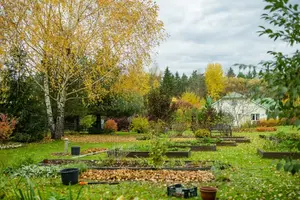
- Pull spent summer plants and add them to the compost pile. Leave roots in the soil where you can; they break down and feed the bed.
- Plant kale, spinach, and salad greens for a fall harvest, and garlic for next summer.
- Cover the bed with compost or shredded leaves for the winter. It works its way into the soil and the bed is rich and ready by spring.
Winter
- Leave the mulch in place to protect the soil.
- Plan next year's layout in the free garden planner and order seeds early.
- In mild winters, kale, leeks, garlic, and overwintering onions keep growing.
Turn a raised bed into a cold frame
Add a hinged lid of old windows, clear plastic, or fiberglass to a raised bed and it becomes a cold frame, so you can start lettuce, radishes, carrots, and spinach weeks before the open garden.
Prop the lid open on warm sunny days; a closed frame can overheat quickly and trapped humidity invites mildew.
Close it in the late afternoon, and on frosty nights cover it with burlap or straw for extra insulation.
Keep very young seedlings out of cold drafts. See the full cold frame guide for building one.
Raised Bed Vegetable Garden Mistakes to Avoid
- Filling with plain garden soil. It packs down hard in a raised bed. Use the compost mix or a blended garden mix.
- Making the bed too wide. Once you have to step in to reach the middle, you're packing down the soil you worked to keep loose. Four feet, no more.
- A shady spot. Perfect soil can't make up for too little sun.
- Uneven watering. Raised beds dry out fast. Irregular watering causes blossom end rot in tomatoes, split fruit, and bitter cucumbers. A drip line on a timer fixes it.
- Planting warm crops too early. The warm soil is tempting, but frost still kills tomatoes and peppers. Wait for your last frost date.
- Crowding. Rich soil isn't unlimited. Crowded plants yield less and get more disease. Follow the spacing table above.
- Forgetting to feed heavy producers. Tomatoes, peppers, and cucumbers need regular feeding once they flower.
- Skipping the spring compost. Twenty minutes once a year keeps the bed improving instead of wearing out.
A Raised Bed Is a Great Family Project
Building and planting a raised bed is a project the whole family can do together, and growing food is a life skill everyone should have.
Children who help in the garden are more willing to eat what comes out of it.
Let each child choose one or two plants to tend and harvest themselves.
Before long, you'll have a family of gardeners.
Images From Our Raised Bed Garden Project 15 Years Ago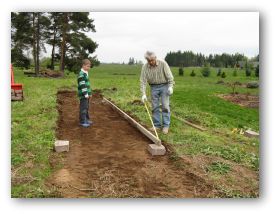 My husband and grandson measuring and preparing to build our raised bed. My husband and grandson measuring and preparing to build our raised bed. Ready for the next step; another row of pavers, then more soil will be added. Ready for the next step; another row of pavers, then more soil will be added.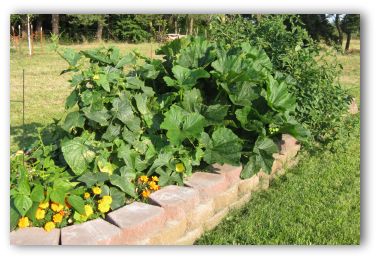 About one month later, look at our garden grow! About one month later, look at our garden grow! |
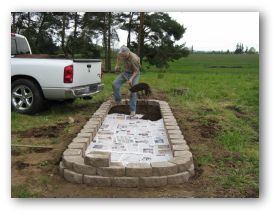 The pavers were started, newspaper lining put down, and purchased raised bed soil is being added. The pavers were started, newspaper lining put down, and purchased raised bed soil is being added.
|




Raised Bed Vegetable Garden Questions
How much does a raised bed cost?
A 4x8 cedar bed typically runs $80 to $150 in lumber, plus about the same again to fill it with soil mix.
Steel kit beds cost about $100 to $200. Prices vary by area. A well-tended bed can grow several hundred dollars' worth of vegetables in one season.
Do I need to put anything under my raised bed?
On grass or soil, lay cardboard or several layers of newspaper before filling.
It smothers the grass, breaks down, and draws earthworms up into the bed.
If you have moles or gophers, staple hardware cloth across the bottom. Skip plastic landscape fabric.
How many raised beds do I need to feed a family?
One 4x8 bed supplies a good share of the salads, herbs, and vegetables for one or two people.
For a family of four, plan on three or four 4x8 beds with succession planting.
Start with one bed, succeed with it, and add more next year.
Can I put a raised bed on concrete or a patio?
Yes. Make it at least 12 inches deep (18 is better) and make sure water can drain out the bottom.
Don't line the bottom with plastic; it traps water.
How do I keep weeds out of a raised bed?
Fresh soil mix has few weed seeds, so the first year is easy. After that, most weeds come from seeds blowing in and grass creeping at the edges.
Mulch between plants and keep the edges trimmed, and any weeds that do sprout pull out easily from the loose soil.
When is the best time to build a raised bed?
Fall is ideal: build and fill it now, and the soil will be settled and ready to plant in early spring.
But you can build and plant a raised bed in any season; in spring, let it settle for a week first.
More answers from readers: raised bed gardening questions and answers.
More Planning Guides
- Planning a Vegetable Garden (the hub)
- Basic Vegetable Garden Design: five layouts for any yard
- Raised Garden Bed Soil: recipes and how much you need
- Square Foot Gardening: The Complete Guide
- Free Vegetable Garden Plans
- Vertical Vegetable Gardening
- Cold Frame Vegetable Garden
- Companion Planting Chart
Return to our Planning a Vegetable Garden hub for complete guides to garden design, layout, raised beds, containers, and planning tools.
Just getting started with a garden of your own? See our guide to homestead gardening for beginners for how a raised bed fits into growing more of your own food over time.
The Old Farmer's Almanac has a complete raised bed gardening guide covering site selection, materials, soil mixes, planting layouts, and seasonal maintenance for productive raised bed vegetable gardens.

Recent Articles


-
Raised Bed Vegetable Garden: Plans, Layouts, and How to Build One
Sep 27, 26 09:37 PM
 A raised bed vegetable garden step by step: where to put it, size and depth, materials, how to build and fill it, a free 4x8 planting plan, and what to grow.
 -
Container Vegetable Gardening: Ideas, Designs, and Growing Tips
Sep 27, 26 05:56 PM
 Container vegetable gardening made easy: best pots and soil, what to grow, pot sizes, watering and feeding, plus container garden designs, ideas, and pictures.
 -
Fall Vegetable Garden Guide: The Complete Guide to Autumn Growing
Sep 26, 26 11:28 AM
 This fall vegetable garden guide covers the best crops, timing, frost protection, and planting charts for a productive autumn harvest.
 -
Garden Story for Children: Free Printable; Ben's Garden Year
Sep 25, 26 12:50 PM
 A free printable garden story for children ages 4-7. Read it online or print the picture book: Ben plants seeds in winter, grows a tomato, and picks radishes.
 -
Basic Vegetable Garden Design: Layouts, Plans, and Ideas for Any Yard
Sep 24, 26 08:10 PM
 Basic vegetable garden design made simple: pick a layout, raised beds or in-ground, paths and water, the four-square rotation, and free plans and a planner.
 -
Child Vegetable Garden--Kids Gardening Hub
Sep 23, 26 08:04 PM
 Everything for kids in the garden; free worksheets, coloring books, preschool activities, scarecrow projects, and tips for planning a child vegetable garden.
 -
Growing Cucumbers — Complete Guide to Planting, Care, and Harvest
Sep 23, 26 01:59 PM
 Complete guide to growing cucumbers: varieties, planting times, soil, spacing, trellising, watering, pests, and harvesting for a big cucumber crop.